|
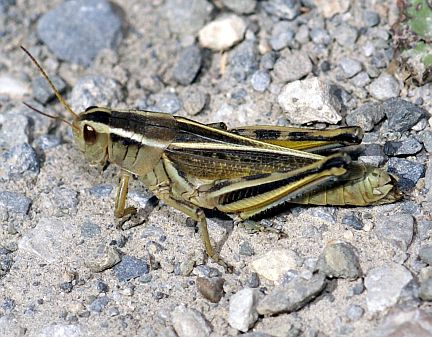
Common Name: Two-striped Grasshopper, Yellow-Striped Locust Latin Name:
Melanoplus bivittatus Say, 1825
(R. Bercha, det.)
Length: 28 - 41 mm
Range: Southern 2/3 of
Alberta
Habitat:
Moist meadows, tall grass
prairie, crop borders,
roadsides, and ditch banks.
Time of year seen: June
to October
(Additional Sightings)
Diet: Grasses and cereals
Other: M. bivittatus is a large grasshopper
that is typically found in moist habitats. It is easily identified by
a pair of pale yellow stripes running along the top of it body from above
it's eyes to the hind tip of it's wings. Upper body color is typically
bright apple green to yellowish green and the hind tibia ranges from red to
bluish to greenish. The females are generally poor fliers while the
males fly well. There is one generation per year with larger populations
occurring every second year. Numerous natural enemies attack M.
bivittatus including parasitic wasps, nematodes, parasitic mites and
bacteria. Economically the Two-striped Grasshopper may cause severe
damage to corn, strawberry, tobacco and alfalfa crops. (Vickery and
Kevan, 1985) |